

Landlord Lessons: DIY Property Management or Delegate?
When Managing It Yourself Becomes More Work Than It’s Worth
- FrontLobby
- Published

Table of Contents
Watch the Full Webinar Replay
When DIY Property Management Starts Costing You
Build Systems Before You Delegate
Your Network Is Part of Your Rental Business
Know What You Should Never Fully Delegate
Tenant Screening Is Worth Getting Right
How to Choose the Right Property Manager
Build Better Systems for Your Rental Business
DIY or Delegate? Build a Rental Business That Works for You
Frequently Asked Questions
Most Landlords begin by doing almost everything themselves.
You find the Tenant, answer calls, collect rent, coordinate maintenance, and keep the paperwork organized. For one property, that may work well. But as a portfolio grows, the question changes from “Can I do this myself?” to “Is this still the best use of my time?”
In this Landlord Lessons webinar, FrontLobby Ambassador Kayla Andrade was joined by real estate investor and Landlording on Autopilot author Mike Butler and Keaton Bessey, Owner and Managing Broker at Greater Vancouver Tenant & Property Management.
Together, they explored how Housing Providers can decide what to keep doing themselves, what to systemize, and when it makes sense to delegate. While rental regulations and requirements vary by state and local jurisdiction in the U.S., the central message of the discussion applies broadly: delegation is not about giving up control. It is about building a rental business that does not depend on you doing every task yourself.
Watch the Full Webinar Replay
Watch Landlord Lessons: DIY or Delegate? How Successful Housing Providers Decide What to Handle Themselves and What to Outsource for the complete discussion and real-world examples from the panel.
When DIY Property Management Starts Costing You
Doing something yourself is not automatically the cheaper option.
Mike Butler learned this early in his investing career.
While managing his first few properties, Mike spent a Saturday painting one of his rental homes himself. During that time, he missed a call about an investment opportunity that ultimately made another investor $20,000.
Mike realized he could have paid someone roughly $200 to complete the painting. Instead, doing the work himself had cost him the opportunity to pursue a much more valuable deal. He sold his maintenance truck and began delegating that work.
The lesson was not that every Landlord should immediately outsource maintenance. It was to consider the opportunity cost of your time.
DIY may make sense when you have a small portfolio, the necessary skills, and enough time to manage the work properly. It becomes a problem when routine tasks prevent you from focusing on higher-value responsibilities or when you are simply stretched too thin.
Keaton added another consideration. Many DIY Landlords do not track how much time property management actually consumes. Instead, they notice the stress and “mental real estate” it takes up. Finding Tenants, arranging showings, and completing paperwork can become a significant burden even when the hours are never formally counted.
The better question is not “Can I do this?”
It is “Should I still be the person doing this?”
Build Systems Before You Delegate
Delegation works best when there is already a process for someone else to follow.
When Kayla asked what separates someone who owns rental properties from someone who has built a rental business, Mike identified systems and management as one of the biggest differences.
Without repeatable processes, hiring someone can simply transfer confusion from one person to another.
Housing Providers should understand how important parts of the tenancy are supposed to work, including maintenance, Tenant communication, documentation, rent collection, and Tenant Screening. U.S. Landlords should also be familiar with the state and local requirements that apply to their properties.
Then they can determine where technology, outside professionals, or a Property Manager can make those processes more efficient.
Technology can also make DIY property management more manageable. Mike encouraged Housing Providers to use tools that create digital, time-stamped records rather than relying on handwritten notes or memory. Good documentation creates a clearer history of communication and decisions throughout a tenancy.
Systems also make it easier to grow. If adding another property means personally adding another set of calls, maintenance requests, and administrative tasks to your workload, your portfolio is still dependent on your available time.
A scalable rental business needs processes that can continue working as the number of properties increases.
Your Network Is Part of Your Rental Business
When asked what system a Housing Provider should establish before scaling, Keaton’s answer was immediate:
A network.
Even someone with one or two properties can benefit from having a reliable handyman, plumber, electrician, or other professional who can respond when something goes wrong. As the portfolio grows, that network may expand to include accountants, lenders or mortgage professionals, real estate professionals, contractors, appraisers, attorneys, and inspectors.
Mike expanded that definition to include experienced peers and people you can learn from.
This is an important distinction because delegation does not have to mean handing your entire portfolio to a Property Manager.
A Housing Provider might continue managing their own properties while delegating:
- Repairs and maintenance
- Accounting
- Legal matters
- Property inspections
- Tenant placement or specific parts of Tenant Screening
Kayla noted that outside professionals can be particularly valuable when a Housing Provider owns property in another city or state, works full-time, or simply does not have the expertise to confidently manage a particular task.
Building a team gives you options before a problem becomes urgent.
Know What You Should Never Fully Delegate
Delegating a task does not mean ignoring it.
Keaton emphasized that Housing Providers should continue watching the financial performance of their properties. Keeping rental income and expenses organized separately makes it easier to understand what is actually coming in and going out and whether the investment is performing as expected.
Kayla added that Housing Providers should continue following their local rental market and understand the decisions being made on their behalf. In the U.S., owners should also remain aware of the state and local rental requirements that apply to their properties.
Even when a Property Manager handles the day-to-day work, the property owner still needs enough visibility to make informed decisions.
The goal is not to remove yourself from the business.
It is to move from doing everything to overseeing the systems and people responsible for doing it well.
That distinction becomes increasingly important as a portfolio grows.
Tenant Screening Is Worth Getting Right
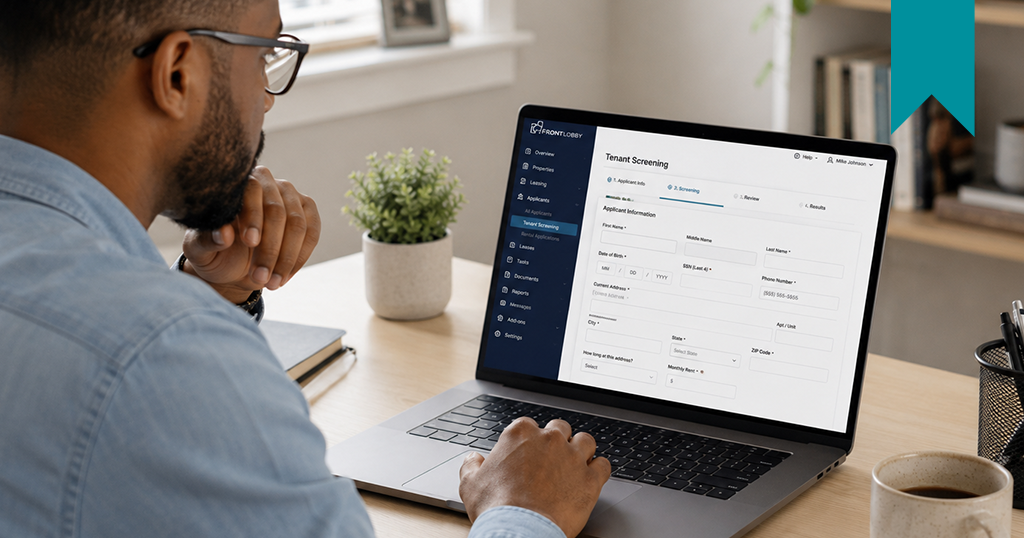
When Kayla asked about the biggest mistake Landlords make while trying to save money by doing everything themselves, Keaton had one immediate answer:
Tenant Screening.
Once a lease is signed, the screening decision has already been made. That makes the work completed before handing over the keys especially important.
The panel discussed looking beyond the rent amount and considering the complete application. Keaton pointed out that accepting a Tenant willing to pay slightly more does not necessarily produce a better financial outcome if the Tenant was not properly screened and the tenancy quickly runs into problems.
For DIY Landlords, Kayla recommended obtaining your own Tenant Credit Check rather than relying on a report supplied by the applicant. Landlords who handle this process themselves can learn more about Tenant Screening and what to consider before choosing a Tenant.
She also highlighted FrontLobby’s Tenant Credit Check and Background Check tools as resources Housing Providers can access directly when completing their own Tenant Screening.
U.S. Landlords should make sure their screening policies and criteria follow applicable federal, state, and local requirements.
The larger lesson applies whether you screen applicants yourself or delegate the work to a Property Manager:
Know what the screening process actually includes.
Screen Your Next Tenant With Confidence
FrontLobby’s Tenant Screening tools give U.S. Housing Providers access to Tenant Credit Checks and Background Checks to help support more informed rental decisions.
How to Choose the Right Property Manager
Hiring a Property Manager is itself a business decision that requires due diligence.
Kayla recommended asking who will actually manage your property, how many properties each manager oversees, how often you will receive updates, and how maintenance decisions are handled. Housing Providers should also understand the company’s Tenant Screening process, inspection schedule, and approach to difficult Tenant situations.
Depending on the state, you may also want to confirm any licensing or professional requirements that apply to property management services in that jurisdiction.
Keaton suggested asking questions that reveal how well the company understands its own performance. A Property Manager should be able to discuss measurements such as days on market, rent collection rates, and the number of properties they regularly lease.
Price also deserves a closer look.
A lower monthly management percentage may appear cheaper while additional charges for inspections, lease renewals, Tenant placement, or other services make the total cost higher. Keaton recommended understanding what services are included and what you are likely to pay over the full relationship rather than comparing management percentages alone.
Ultimately, hiring a Property Manager should make your rental business easier to operate without making you less informed about how it is being managed.
Build Better Systems for Your Rental Business
You don’t need a large portfolio to start building better systems. A free FrontLobby membership gives Housing Providers access to tools designed for Landlords and resources that can help make everyday rental management easier.
Having processes for documentation, Tenant communication, screening, rent collection, and outside support can make it easier to manage your current properties while preparing for future growth.
DIY or Delegate? Build a Rental Business That Works for You
There is no single point when every Housing Provider should stop managing their properties themselves. For some, DIY property management remains the right choice for years. For others, delegating maintenance, Tenant Screening, accounting, or day-to-day management creates the time they need to focus on growing their portfolio.
The important part is making that decision intentionally.
Your approach may also change as you buy properties in different cities or states, take on more units, or encounter rental requirements that make professional support more valuable.
As Kayla summarized at the end of the webinar, delegating isn’t about giving up control. It’s about creating the right systems, building the right team, and developing a rental business that doesn’t depend entirely on you.
Whether you own one rental property or twenty, that is ultimately the difference between simply managing properties and building a rental business.
Frequently Asked Questions
There is no single portfolio size that determines when it is time. The panel discussed time, stress, distance, expertise, and the demands of the portfolio as better indicators. If managing the property is preventing you from focusing on higher-value work or responsibilities are no longer being handled properly, it may be time to consider outside help.
Tenant Screening happens before the Landlord commits to the tenancy. The panel emphasized that mistakes at this stage can be difficult and expensive to correct later. Whether screening yourself or hiring someone else, Housing Providers should understand the process being used and the information being verified. U.S. Landlords should also make sure their screening practices comply with applicable federal, state, and local requirements.
It depends on your skills and portfolio. Maintenance was one of Mike Butler’s first major delegations, while the panel also discussed accounting, inspections, legal matters, Tenant placement, and Tenant Screening as tasks where professional support may make sense.
Yes. The webinar discussed building a network of professionals rather than viewing the decision as entirely DIY or full-service management. A Housing Provider may continue managing the property while using contractors, accountants, legal professionals, or Tenant placement services for specific responsibilities.
Ask who will manage your property, how many properties they oversee, how maintenance and emergencies are handled, how they screen Tenants, how often properties are inspected, what reports you receive, and what services are included in the management fee. You may also want to confirm any licensing requirements that apply to Property Managers in your state.
Yes. Delegation does not mean giving up oversight. Housing Providers should continue monitoring the financial performance of the property, following their rental market, staying aware of relevant state and local requirements, and understanding major decisions being made about their investment.
Disclaimer
The information provided in this post is not intended to be construed as legal advice, nor should it be considered a substitute for obtaining individual legal counsel or consulting your local, state, federal or provincial tenancy laws.
Did You Enjoy This Article?
Then You Will Love Our Newsletter